FAS7900 – A streamlined forensic acquisition system for fast, non-invasive data extraction and analysis, without the need for computer disassembly. Supporting multiple OS, it captures memory and disk images, and includes secure data wiping.
Forensic Expansion Dock – A compact solution for fast, reliable data acquisition from various storage media. With support for multiple interfaces, it ensures secure, stable, and high-speed forensic data transfer for streamlined workflows.
Due to the influence of movies and popular culture, people often get inaccurate ideas about this line of work and the overall digital forensics process. But that’s okay! After all, someone who’s not from the inner circle may have a hard time understanding how digital forensics investigations really work.
In fiction, the entire digital investigation process tends to get romanticized, and many hardships law enforcement agencies have to endure often get portrayed in a sugar-coated manner. In turn, this can lead to many people internalizing certain falsehoods about how things play out in reality.
Examples include “magically” enhancing or upscaling blurry photos and video footage, analyzing tissue samples within a moment’s notice, and blazing through complex passwords and encryption like it’s nothing.
Below, we’re about to give you the good, the bad, and the ugly on everything you ever wanted to know about the true nature of digital forensics investigations:
Nowadays, digital devices are everywhere and they know much more about us than we can possibly imagine. But to make sense of it all, only a licensed and accredited digital forensics professional can tie the dots together and get through the digital and hardware roadblocks you are bound to encounter on the way.
In civil litigation, digital forensic companies and organizations play an important role in bringing the truth to light. This means it matters a great deal who you end up working with, so you’re encouraged to do your due diligence and be as discerning as possible in order to select the most suitable candidate.
After all, you need concrete results and not just another barrage of platitudes and promises that won’t get you anywhere. The only question is, how to go about it and where to start? Keep in mind there are other vital factors at play, so remaining discerning and diligent is also crucial for the sake of compliance, preserving the integrity of evidence collected, and making it admissible in court.
Before inking the deal with any digital forensics companies, make sure to double-check their professional competency and how well-equipped and knowledgeable they are in the following areas:
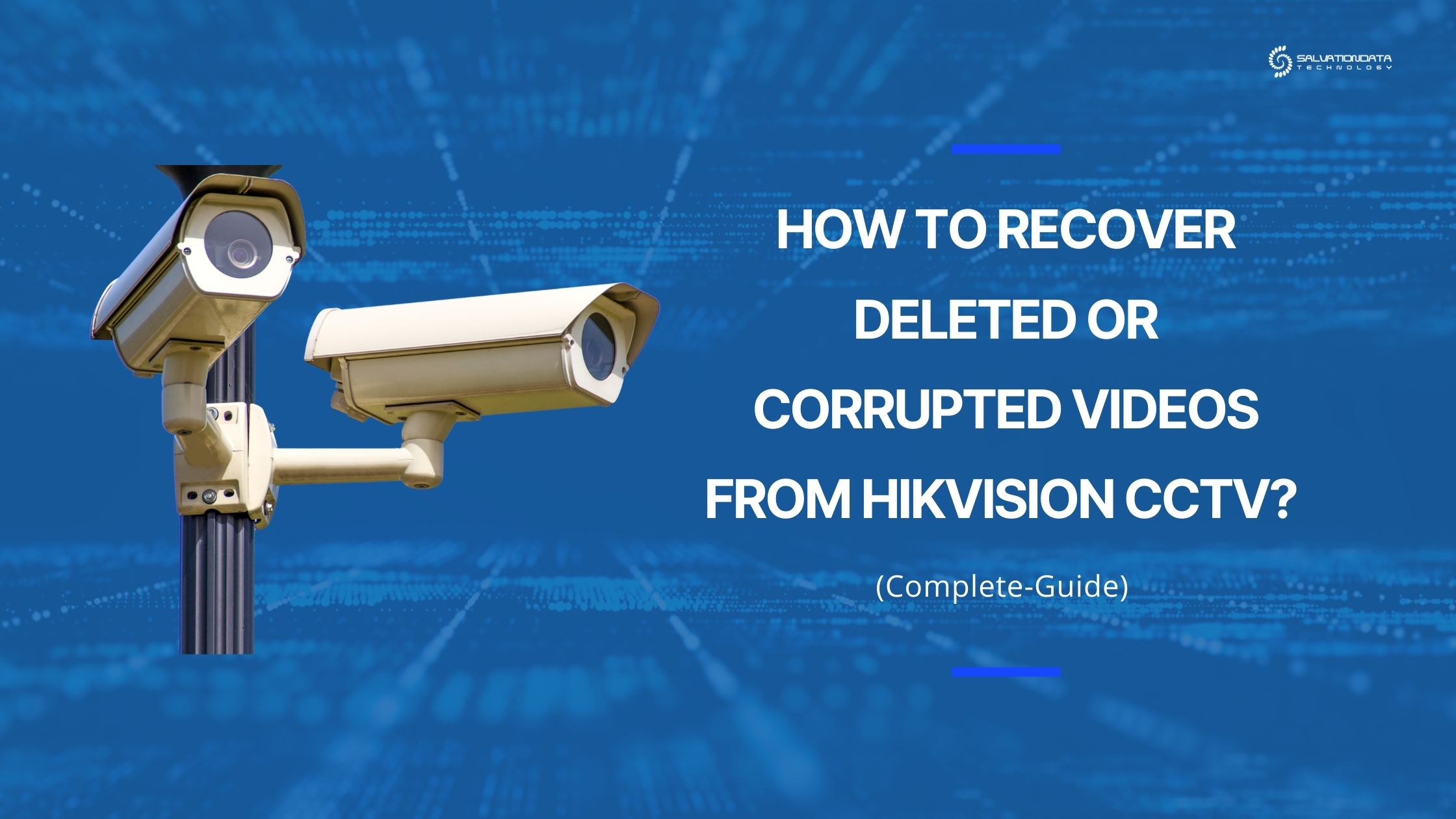
CCTV cameras are the cornerstone of home and premises security. The video footage extracted from them serves as valuable digital evidence that can reconstruct the events exactly as they transpired.
In court, this is even better than having a witness retell the story.
However, even a small glitch or a moment of improper care can corrupt the footage, which could be a massive problem when trying to bring the culprits to justice. Since even a professional forensic DVR examiner can potentially get stuck when trying to recover corrupted or erased video footage from the hard drive, trying to do it yourself could do more harm than good and may even wind up making the files harder to retrieve.
When it comes to surveillance videos, since HikVision is the leading brand in the video surveillance industry, we’ve written a detailed how-to guide on how to approach the issue of HikVision DVR deleted data recovery correctly without jeopardizing the integrity of the footage.
No matter how careful you are, nothing can guarantee the safety of your digital files and there are several ways how data loss can occur.
Depending on what was lost, data loss can be a minor inconvenience or a major disaster. Best case, you still need to spend time and resources to recover it during a forensic data investigation.
Either way, data loss can make a forensic analyst’s job harder, and without the proper hard disk recovery tools, you can quickly find yourself dead in the water.
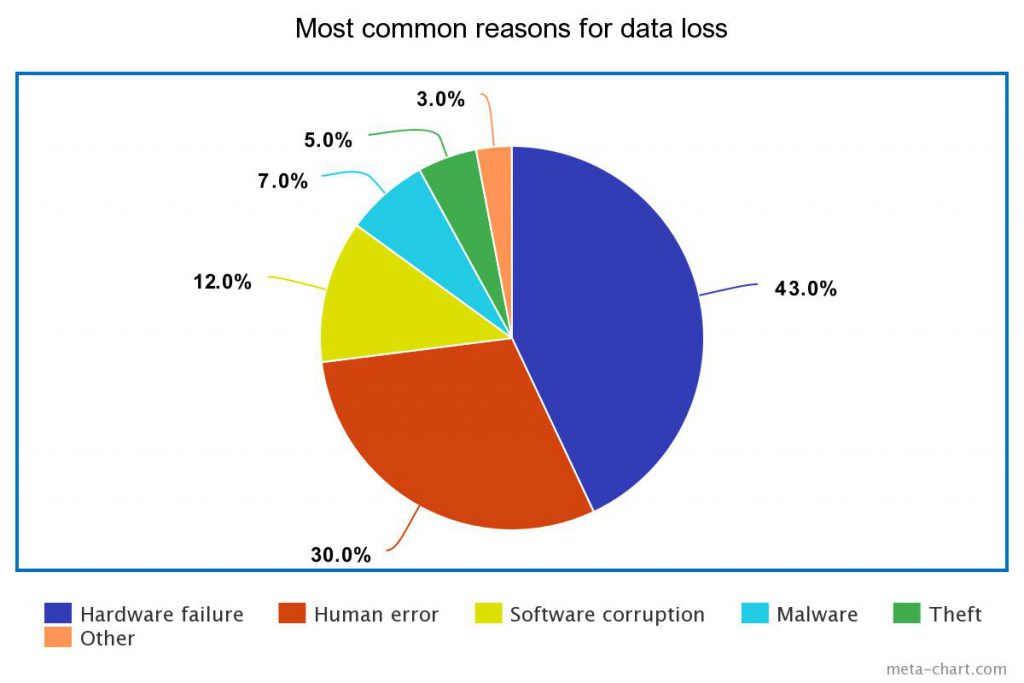
According to R-explorer, hardware failure is the leading cause of data loss, with human error trailing close behind.
Today, we will cover the most common reasons for data loss and see whether there are any solutions that can aid you during forensics recovery.
MS SQL Server is one of the most seamlessly reliable databases that facilitate companies, especially law enforcement, intelligence, and investigative agencies, with advanced internal structure. The core concern of every agency is to safely keep the information and data from abrupt shutdowns, viruses, and other operating system failures.
MDF recovery software aids in restoring SQL Server database objects, including tables, files, indexes, functions, etc., becoming a utility for every small and large-scale organization.
SQL Server has two types of data files in its default directory known as Master Database File (MDF) and Log Database File (LDF). MDF plays a pivotal role in holding and storing critical database information. MDF file, being the primary database file, stores and holds all the tables, functions, triggers, and much more data and information. Therefore, corruption of MDF files causes serious systematic errors for users.
Databases help companies give value to their raw data to conduct numerous critical analyses. These companies might use a SQL database to conduct manipulations to detect patterns in their business transactions to unearth hidden opportunities. As a Digital Forensic Analyst, you might be tasked to cross-check some aspects of the company’s database during an audit.
What if something corrupts your data and you’re unable to use it?
To avoid interruptions during your investigation, it’s essential to use SQL database recovery software. For instance, you’re able to easily recover corrupted or lost data from SQLServer with the help of an effective tool capable of restoring your lost data with utmost proficiency. With an advanced database recovery tool, you can immediately restore and repair all corrupt NDF and MDF files without compromising the integrity of the original data that may be part of an investigative analysis.
During a forensic investigation, you’re likely to encounter several obstacles and roadblocks when trying to extract and/or repair video footage, and video errors are a great example of this.
Fail to resolve them quickly enough, and the entire investigation could effectively come to a standstill. Worse yet, by using outdated digital forensic equipment, you could potentially corrupt the video file and thus jeopardize the entire case by damaging a vital piece of digital evidence.
To avoid bumping into similar problems in the future and to minimize their impact on the investigation, we’ve prepared a list that covers some of the most common video file errors you could see during a forensic investigation.
After reading today’s post, you’ll be fully equipped with the knowledge on how to fix them and avoid causing any further damage to the video file. Stick to the very end, and we’ll also let you in on a secret and divulge what you need to do to prevent these errors from happening ever again.
FACT: Even deleted video recordings can be restored and recovered by a skilled forensic analyst. (source: commons.bcit.ca/forensics)
SQL Server that stores all the databases often goes through hindrances that need to be addressed and fixed. Whenever a database fails to shut down properly, the SQL server goes into crash recovery mode to ensure that the database remains consistent. SQL server database in recovery goes through three different phases where each phase indicates and fixes issues and errors.
These three states of SQL server databases depend upon the severity of the damage, which includes:
Online State
The SQL Server database can still be accessed online when the data file gets damaged while executing a query.
Suspect State
When you cannot easily access a database while SQL server database is in recovery state after a restart, the database is marked as suspect.
Recovery Pending State
When the SQL database in recovery phase checks the progress and something prevents it from starting, the database is placed in a recovery pending state.
Database forensics has expanded its scope to daily life because of the daily needs of this technology.
Database forensics have different uses cases like that of prevention of crimes, corruption, assistance in surveillance, etc.
The development in this field is leading to the prevention of possible errors in data processing.
With the expansion of technology, companies and organizations are getting on board with new innovative techniques and strategies. Digital practices and innovations have brought a change in business management. Modern companies are more dependent on technology, as new software ensures more efficiency. Their inclination towards the use of technology is primarily because of the extensive use cases offered by technical advancements.
However, as businesses get onboard with modern innovations, they are exposed to the world of cybercrime and hacking. The sensitive data of major companies and organizations is highly confidential. This is why businesses prioritize the security and safety of their data through different measures. But privatization of data is also used as a tool by criminals and people with maligned intentions.
The scrutiny of such elements is critical or else it could pose a major threat in the longer run. Under this scenario, Database Forensics come into action, as it helps in cracking into different use cases. Therefore, it is used by criminal investigators and authorities to keep a regular check on different types of database systems.
People from all over the world use different databases to hold their information. These databases have different use cases. However, database forensics can dig into these use cases for different purposes.
In this article, we will understand the role of database forensics. Additionally, we will dig deep into the types of use cases commonly applied in database forensics.
The study of data for forensic analysis is a fast developing field. It has begun to evolve since the popular use of computers in businesses and other fields. As there has been the development of sophisticated computer systems, data analysis has also evolved.
A Forensic data analyst can use data for different purposes. There are various reasons that the below mentioned field can be used for benefitting corporate companies, public organizations, or serving law enforcement agencies.
If you’re looking to get someone convicted of a crime you know they’re guilty of, it’s imperative to follow the protocol. Those who find themselves presenting digital evidence in court are up against a lot of pressure and it’s easy to get caught up in the pitfalls, some of which could render the evidence inadmissible and thus cost you the case.
Thanks to the advancement of technology, many CCTV can now capture detailed footage without costing an arm and a leg. Therefore, video evidence has risen in prevalence and numerous court proceedings rely on it to determine the outcome of a case.
But with different providers comes the challenge of specific file formats, preserving the authenticity of the recorded footage, and a myriad of other hurdles you’d best get acquainted with in advance.
FACT: Video evidence is estimated to play a role in 80% of crimes. (Source: bja.ojp.gov)
In today’s post, we’re going to impress you about the key differences between admissible and inadmissible audience and lay out the best practices for making sure you don’t get tangled up in any unpleasant surprises in court.