
【Case Study】Partition Recovery in Digital Forensics: Partition Recovery and Deleted Data Recovery Explained
-
Content
- Challenges in Modern Digital Forensics
- Solution: How DRS Enabled Efficient Forensic Analysis
- Conclusion: Addressing Advanced Data Concealment Techniques
- FAQ
-
Content
- Challenges in Modern Digital Forensics
- Solution: How DRS Enabled Efficient Forensic Analysis
- Conclusion: Addressing Advanced Data Concealment Techniques
- FAQ
Challenges in Modern Digital Forensics
Modern digital forensics is becoming increasingly complex as criminals adopt more advanced methods to conceal evidence. Data is often buried within large volumes of irrelevant or misleading content, making investigations more difficult and time-consuming.
A common challenge involves storage media with incomplete or inaccessible structures, such as lost or hidden partitions. In such cases, effective partition recovery and lost partition recovery are essential to regain access to critical data.
At the same time, investigators frequently encounter large numbers of duplicate, corrupted, or fake files—such as unreadable images—which further complicates analysis. Reliable deleted recovery and data validation are therefore crucial to identify valid evidence and ensure its integrity.
Case Background: Suspicious Data on a Seized Hard Drive
During an illegal trading investigation, law enforcement seized a suspect’s hard drive for forensic analysis. The suspect stated that the drive contained a BitLocker-encrypted partition and provided the corresponding PIN. However, upon examination, only a visible, unencrypted partition was found.
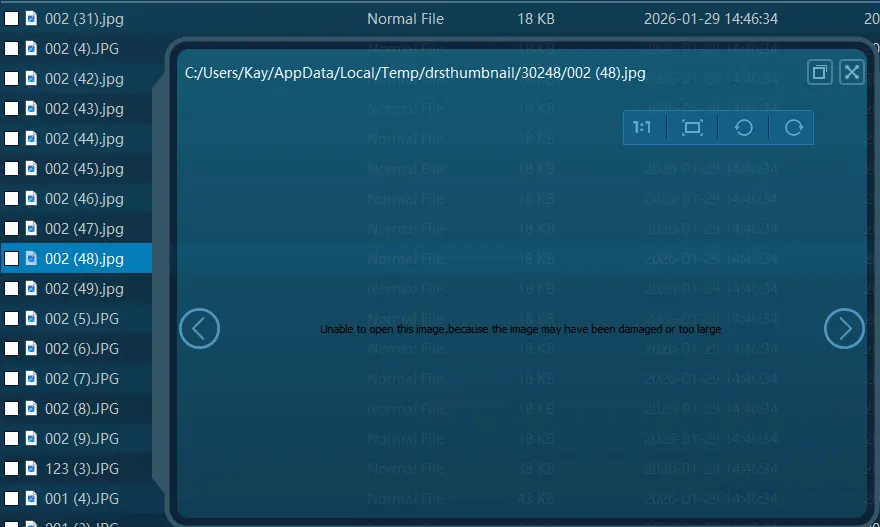
This accessible partition contained a large number of image files, but the data appeared highly disorganized. Many files shared identical names, and some images could not be opened. These anomalies suggested that critical evidence might be concealed or missing, indicating the need for deeper forensic analysis.
Investigation Challenges
Investigators encountered several key challenges during the analysis:
- The claimed encrypted partition could not be detected
- Indicators pointed to the existence of lost or hidden partitions
- A large volume of data included: Duplicated image files and corrupted or unreadable JPG files
- Significant difficulty in distinguishing valid evidence from irrelevant or misleading data
These factors greatly increased the complexity of the investigation and hindered efficient evidence identification.
Solution: How DRS Enabled Efficient Forensic Analysis
1. Forensic Imaging to Preserve Data Integrity
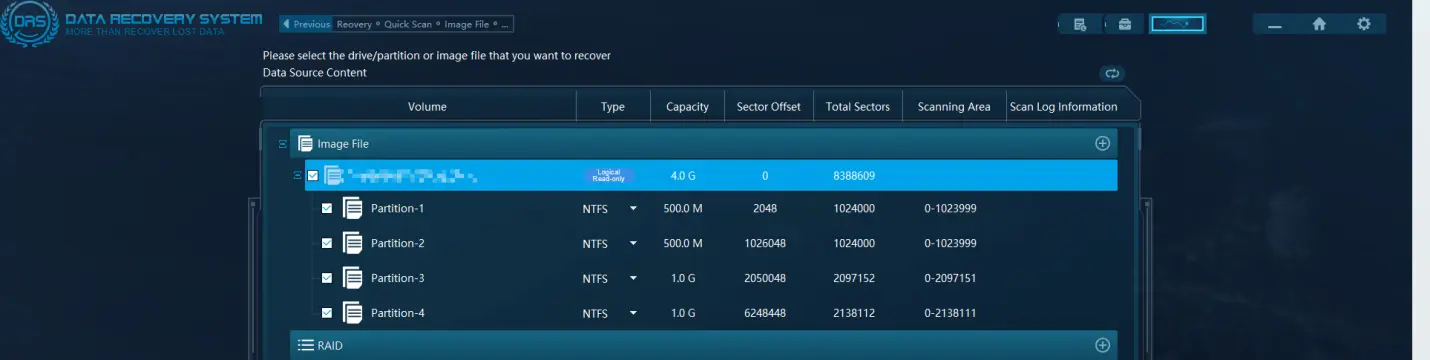
Before any analysis, a full disk image was created using DRS. This ensured a forensically sound workflow, preserving the original data and preventing any unintended modification during the investigation.
2. Lost Partition Recovery and Detection
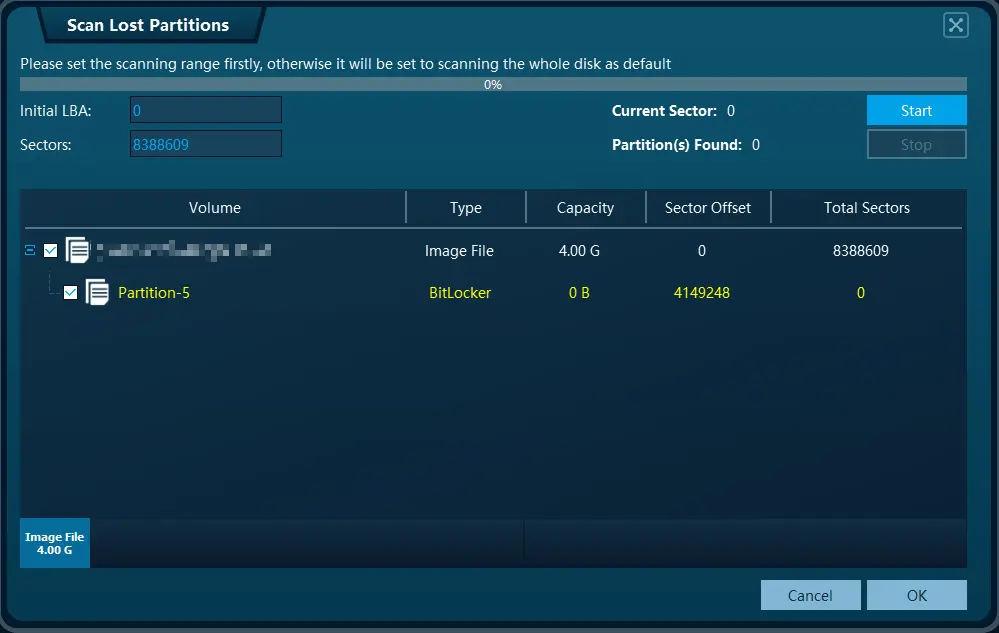
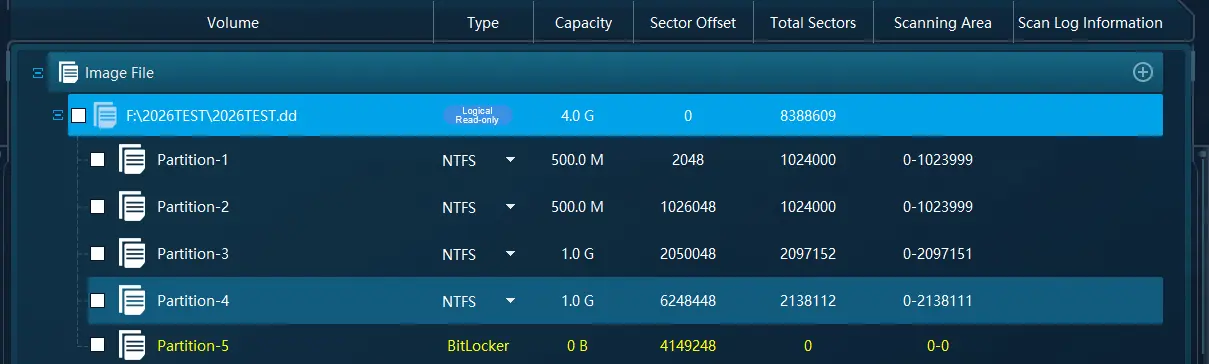
DRS was used to scan for lost partitions, revealing previously undetected partition structures. Through sector offset analysis, investigators identified the missing partition and successfully reconstructed the complete partition layout, restoring access to hidden data.
File Detection
3. Deleted Recovery and File Validation
To address disorganized data, DRS enabled efficient filtering of invalid files, such as fake or abnormal 1KB JPGs. At the same time, deleted recovery techniques were applied to retrieve meaningful data from fragmented or damaged files, improving the overall quality of recovered evidence.
File Validation
4. Hash-Based Deduplication and Evidence Verification
DRS utilized hash comparison to eliminate duplicate files and reduce data redundancy. While MD5 was used for initial matching, its collision risk was considered, and more reliable algorithms such as SHA-256 and SHA-512 were applied when higher verification accuracy was required. This process ensured both data integrity and evidentiary reliability.
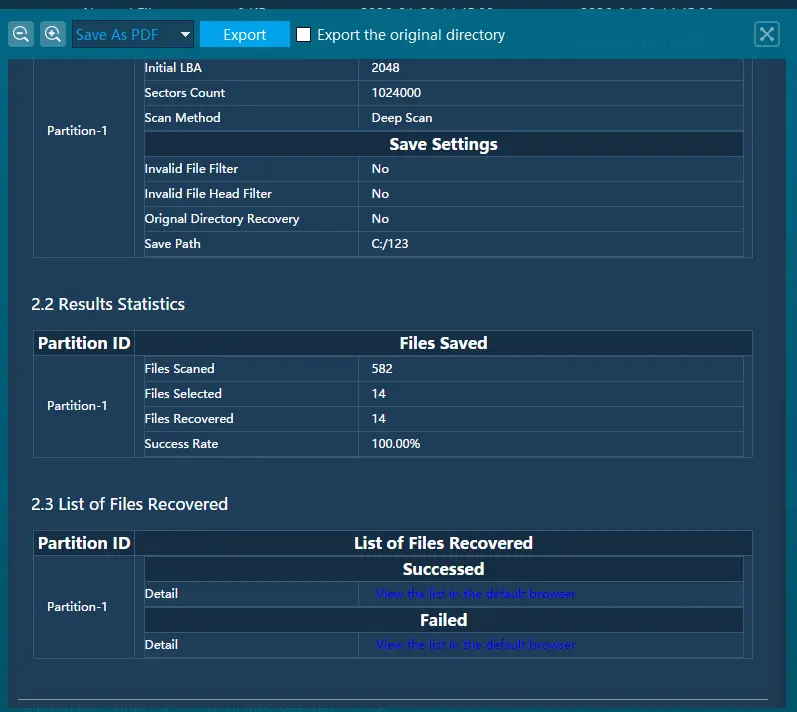
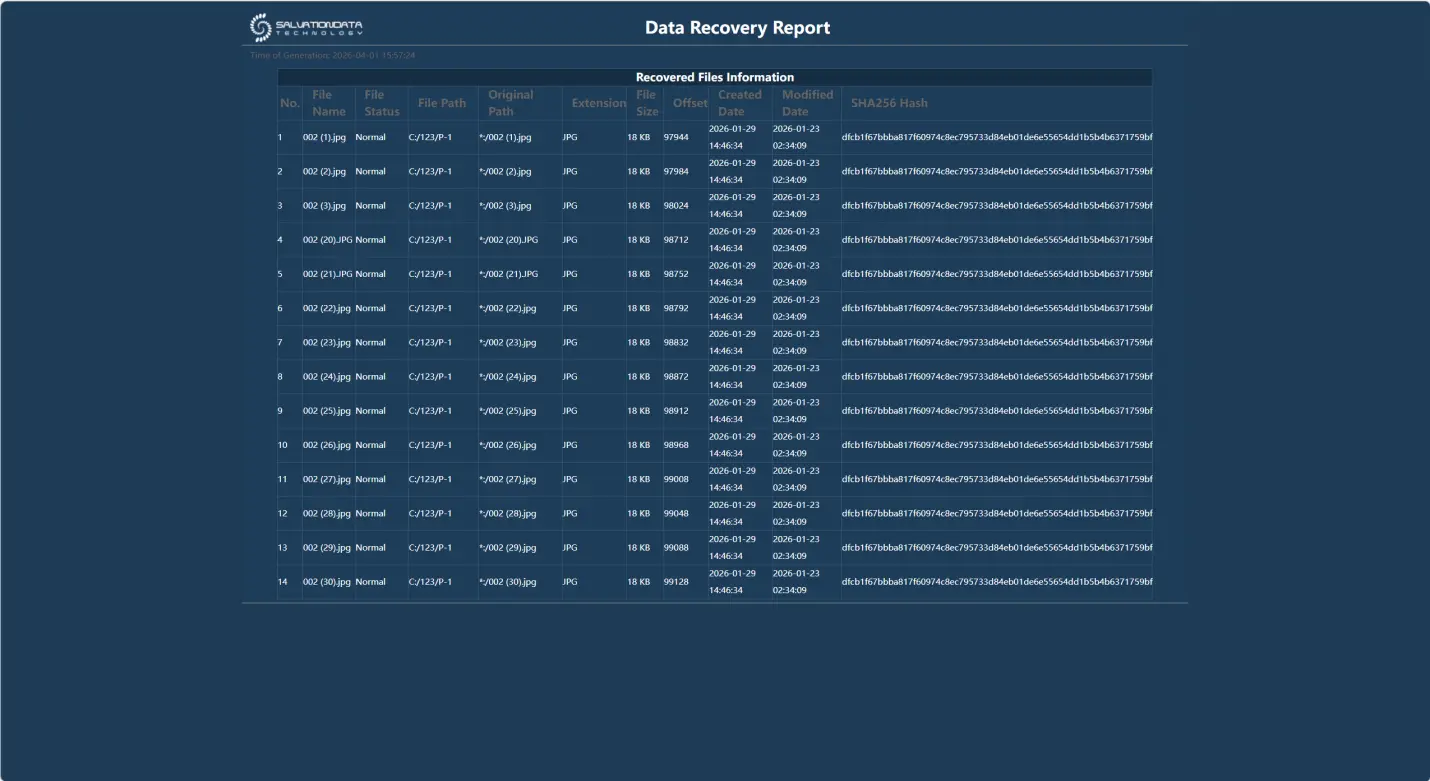
Forensic Data Recovery Report Generation
Key Findings: Reconstructing Hidden Evidence
The analysis revealed that the suspects used coded communication methods, with images serving as indicators for specific transactions. Valid and invalid files were deliberately mixed to obscure meaningful data.
By leveraging DRS, investigators successfully reconstructed key communication patterns and transaction logic. Critical evidence, previously hidden within fragmented and misleading data, was ultimately recovered and validated.
Why DRS Matters in Digital Forensics
- Comprehensive Recovery: DRS enables reliable recovery from lost partitionsand complex storage scenarios, ensuring that critical data is not overlooked.
- Accurate Evidence Validation: Withstandard hash-based verification, DRS ensures the integrity and reliability of digital evidence, meeting forensic standards.
- High Efficiency in Investigation Workflows: By automating data filtering and analysis, DRS significantly reduces manual effort and improves overall investigation efficiency.
Conclusion: Addressing Advanced Data Concealment Techniques
Criminals increasingly use encryption, data fragmentation, and obfuscation to hide evidence, making investigations more complex.
Digital forensics therefore requires advanced tools and reliable recovery methods. DRS addresses these challenges with efficient lost partition recovery, accurate deleted recovery, and forensic-grade data analysis, enabling investigators to uncover hidden evidence with confidence.
FAQ
- What is lost partition recovery in digital forensics?
Lost partition recovery is the process of detecting and restoring partitions that are no longer visible due to deletion, corruption, or structural damage, allowing access to previously hidden data.
- How does hash help in removing duplicate forensic data?
Hash algorithms generate unique digital fingerprints for files, enabling quick identification and removal of duplicates, which improves analysis efficiency.
- Why is SHA-256 preferred over MD5 in forensic investigations?
MD5 is faster, but due to hash collisions, completely different files may produce the same hash value, which can mislead investigators. SHA-256 provides stronger reliability, making it more suitable for maintaining evidence integrity.
- What causes a partition to become lost or hidden?
Partitions may become lost due to accidental deletion, disk corruption, malware activity, or intentional concealment techniques used to hide data.
- Can corrupted or unreadable files still be useful in an investigation?
Yes. Even corrupted files may contain partial or recoverable data. With proper tools, investigators can extract meaningful information from damaged or fragmented files.
- Why is forensic imaging important before analysis?
Forensic imaging creates an exact copy of the original storage device, ensuring that analysis is conducted without altering the source data and preserving evidentiary integrity.


